
Parliament Retains Exclusive Authority to Amend Constitution, Asserts Minister Talal Chaudhry
Exclusive authority to amend is covered in the report below.
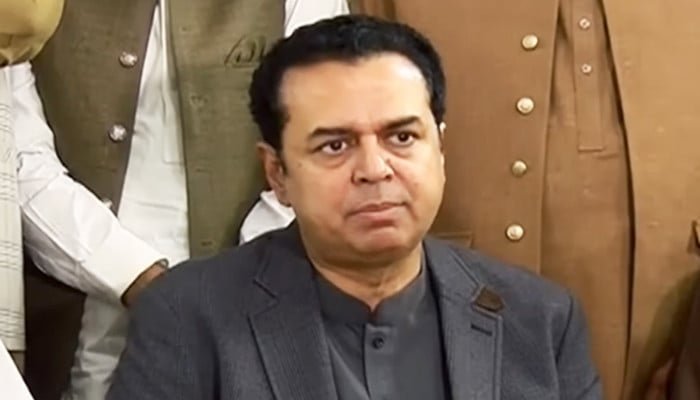
Minister of State for Interior Talal Chaudhry addressed a press conference in Faisalabad on November 16, 2025, defending the federal government's position regarding constitutional amendments. He
Minister of State for Interior Talal Chaudhry addressed a press conference in Faisalabad on November 16, 2025, defending the federal government's position regarding constitutional amendments. He emphasized that only Parliament holds the exclusive right to amend the Constitution, following criticism from Supreme Court judges regarding the recent 27th Constitutional Amendment.
Exclusive authority to amend: Context of the Resignations
The minister's remarks came on the heels of the resignations of two prominent Supreme Court justices, Mansoor Ali Shah and Athar Minallah, which were submitted after the enactment of the 27th Constitutional Amendment earlier this week. Additionally, Lahore High Court judge Shams Mehmood Mirza resigned a day prior, citing his principle and conscience as reasons for his departure.
The 27th Amendment made several adjustments, including refinements to the newly established Federal Constitutional Court (FCC), clarifications on the titles and rankings of top judges, and modifications to military command structures. President Asif Ali Zardari approved the resignations of Justices Shah and Minallah on Friday.
The Role of Parliament
During the press conference, Chaudhry reiterated, "Amending the Constitution is Parliament's exclusive right, and it will do so whenever it chooses." He underscored that judges should not assume a political role, stating, "They are not a political party" and only take an oath to uphold the Constitution. He criticized sections of the judiciary, declaring that the Constitution must reflect the will of Parliament and the people of Pakistan rather than the preferences of judges. He further asserted that the legislature must be recognized as a legitimate parliamentary body and lamented that certain individuals had diminished its stature to that of a municipal corporation.
Chaudhry maintained that matters such as judges' salaries and decisions ultimately fall under the purview of Parliament, calling the judges' resignations "political" and alleging that they had exhibited partiality. He cautioned that the country cannot tolerate chaos or instability at this critical time, noting, "At times, they dismissed prime ministers through suo motu, and at other times they paralyzed elected governments."
Concerns About Judicial Independence
The resignations of the Supreme Court justices have been characterized as a reaction against the 27th Amendment, which they described as a "grave assault on the Constitution of Pakistan." In his resignation letter, Justice Shah argued that the amendment dismantles the Supreme Court, compromises judicial independence, and erodes the foundations of constitutional democracy. He warned that constrained justice signals the "beginning of the end" for judicial independence.
Justice Minallah echoed similar sentiments in his resignation letter, rejecting the legitimacy of the 27th Amendment and asserting that the Constitution he swore to defend "no longer exists" in its true spirit. He previously warned the Chief Justice about the potential consequences of the amendment but felt his concerns were met with silence.
In response to the resignations, the federal government dismissed the judges' comments as "political speeches" and described their allegations as "unconstitutional."
