
U.S. Report Highlights Pakistan’s Military Advantage Over India in Recent Conflict
Pakistan's military advantage is covered in the report below.
A recent report submitted to the United States Congress underscores Pakistan's military achievements against India during a four-day conflict in May, during which Pakistan successfully downed Ind
A recent report submitted to the United States Congress underscores Pakistan's military achievements against India during a four-day conflict in May, during which Pakistan successfully downed Indian jets, including French-manufactured Rafale fighters, utilizing Chinese-supplied weaponry. This conflict was initiated by India following a deadly terrorist attack in Pahalgam, which resulted in the loss of 26 lives in Indian Illegally Occupied Jammu and Kashmir.
Pakistan's military advantage: Overview of the Conflict
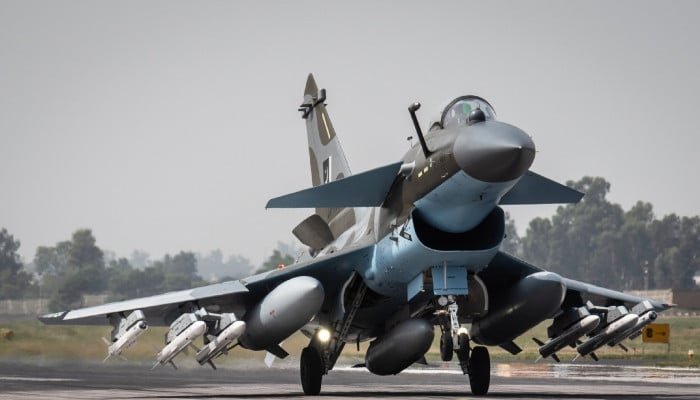
The U.S.-China Economic and Security Review Commission report, which evaluates U.S.-China relations in the realm of security and foreign affairs, acknowledges the growing defense cooperation between Islamabad and Beijing. It reveals that Pakistan effectively deployed advanced Chinese military technology during the conflict, marking the first active combat use of systems such as the HQ-9 air-defense system, PL-15 air-to-air missiles, and J-10C fighter aircraft.
Military Operations and Outcomes
During the conflict, Pakistan reportedly downed seven Indian fighter jets, including Rafales, which has since served as a significant point of interest in China's defense sales strategy. The report noted that, following the conflict, China offered Pakistan 40 J-35 fifth-generation fighter jets, KJ-500 surveillance aircraft, and various ballistic missile defense systems in June.
The intensity of the hostilities was unmatched, with both nations striking targets deeper within each other's territories than at any time in the past half-century. This escalation began on the night of May 5 and 6, when India conducted missile strikes inside Pakistan, claiming they were aimed at terrorist positions in response to the Pahalgam attack. However, these strikes resulted in the deaths of numerous civilians and security personnel.
In retaliation, Pakistan launched a significant military operation named "Operation Bunyan-um-Marsoos," targeting over 20 Indian military installations across various regions. Additionally, Pakistan employed its JF-17 Thunder jets to neutralize India's S-400 air defense system in Adampur using hypersonic missiles. The conflict concluded on May 10 with a ceasefire agreement facilitated by the United States.
