
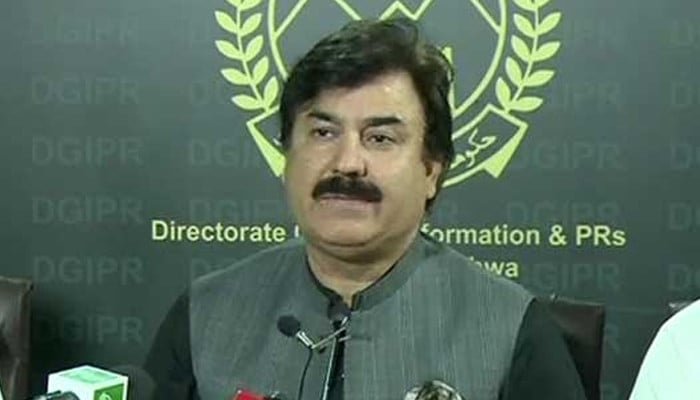
Shaukat Yousafzai: Federal Government to Surrender Amid Political Strategy
Political strategy is covered in the report below.
Shaukat Yousafzai, the Information Secretary of the Pakistan Tehreek-e-Insaf (PTI) in Khyber Pakhtunkhwa, stated that the postponement of the Islamabad long march is a tactical political move aimed at
Shaukat Yousafzai, the Information Secretary of the Pakistan Tehreek-e-Insaf (PTI) in Khyber Pakhtunkhwa, stated that the postponement of the Islamabad long march is a tactical political move aimed at compelling the federal government to concede. In a media briefing in Peshawar, he urged the federal government to move past its stubbornness and politically charged mindset.
Call for Genuine Negotiations
Yousafzai emphasized that while the government engages in televised dialogues, it should approach negotiations with sincerity. He stated that if the federal government is genuinely interested in negotiations, it must demonstrate this intention in practice. He highlighted the presence of thousands of police officers and containers erected as part of the government’s strategy.
Shift in Political Strategy
Expressing support for peaceful resistance, Yousafzai noted that PTI has modified its political strategy. He urged that Imran Khan, the founder of PTI, should receive medical treatment in accordance with judicial orders. He criticized the federal government for what he regarded as undue interference in provincial matters, asserting that post-18th Amendment, such interventions are unconstitutional.
Critique of Federal Government's Actions
Yousafzai condemned remarks made by federal ministers regarding provincial governance, characterizing such statements as detrimental to the state's integrity. He addressed past statements made by Maryam Nawaz concerning provincial issues, arguing that such narratives weaken the state. Furthermore, he stressed that the provincial police laws fall under the jurisdiction of the province, and legislative power should remain within provincial authority. Yousafzai reiterated that enacting laws in the interest of the public is a provincial right and questioned the validity of any imposed regulations, emphasizing the need for police autonomy without external pressure.
