
Reconstitution of Key Constitutional Bodies Following the 27th Amendment
Reconstitution of key constitutional bodies is covered in the report below.
The Supreme Court of Pakistan has announced the reconstitution of three essential constitutional and statutory judicial bodies in accordance with the newly established framework introduced by the 27th
The Supreme Court of Pakistan has announced the reconstitution of three essential constitutional and statutory judicial bodies in accordance with the newly established framework introduced by the 27th Constitutional Amendment. This significant restructuring is aimed at enhancing judicial accountability and procedural governance in the country.
Reconstitution of key constitutional bodies: Reconstituted Bodies
The reconstitution affects three crucial entities: the Supreme Judicial Council (SJC), the Judicial Commission of Pakistan (JCP), and the Supreme Court (Practice and Procedure) Committee. The updates have been made to align these bodies with the amended constitutional structure.
Supreme Judicial Council
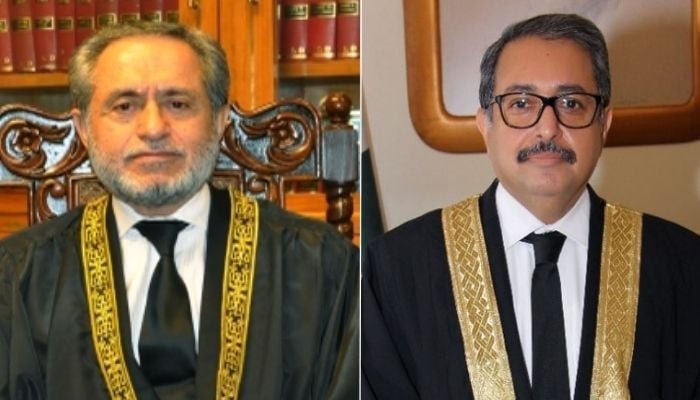
Justice Jamal Khan Mandokhail, the next senior-most judge of the Supreme Court, has been nominated by Chief Justice of Pakistan (CJP) Yahya Afridi and Chief Justice of the Federal Constitutional Court (FCC) Aminuddin Khan to join the SJC, as per Clause 2 (d) of Article 209 of the Constitution of Pakistan. Following this nomination, the reconstituted SJC will comprise: – Chief Justice Yahya Afridi – Chief Justice Aminuddin Khan – Justice Munib Akhtar – Justice Syed Hassan Azhar Rizvi – Chief Justice Aalia Neelum of the Lahore High Court – Chief Justice Sardar Muhammad Sarfraz Dogar of the Islamabad High Court.
In addition, Justice Mandokhail has also been appointed as a member of the Supreme Court (Practice and Procedure) Committee, as outlined in Section 2 of the Supreme Court (Practice and Procedure) Act, 2023. The committee will now include: – Chief Justice Yahya Afridi – Justice Munib Akhtar – Justice Jamal Khan Mandokhail.
Judicial Commission of Pakistan
For the Judicial Commission of Pakistan, Justice Aamer Farooq, the next senior-most judge of the FCC, has been jointly nominated to the commission by the CJP and the FCC Chief Justice, under Clause 2 (iiia) of Article 175A of the Constitution. The updated JCP will consist of: – Chief Justice Yahya Afridi – Chief Justice Aminuddin Khan – Justice Munib Akhtar – Justice Syed Hassan Azhar Rizvi – Justice Aamer Farooq – Attorney General of Pakistan Mansoor Usman Awan – Law Minister Azam Nazeer Tarar – Pakistan Bar Council representative Ahsan Bhoon – Two members from the National Assembly – Two members from the Senate – A woman or non-Muslim nominated by the National Assembly Speaker.
Implications of the 27th Amendment
The reconstituted bodies will play a crucial role in overseeing matters related to accountability, judicial appointments, and procedural governance under the amended constitutional framework. This restructuring follows the recent passage of the 27th Amendment by the Pakistan Muslim League-Nawaz (PML-N)-led ruling coalition. The amendment not only redefines the judicial structure but also enhances the authority of the newly established FCC, which now has equal representation from all provinces and the ability to exercise suo motu jurisdiction.
This judicial overhaul has led to the dissolution of the Constitutional Benches and, through the Supreme Court Practice and Procedure (Amendment) Bill 2025, has transferred the responsibility to establish case-hearing benches to a committee led by the chief justice. Furthermore, the amendment delineates new roles for the president and prime minister in judicial appointments while curtailing some powers of the Supreme Court and redistributing them to the FCC.
Following the enactment of the amendment, Supreme Court judges Justice Mansoor Ali Shah and Justice Athar Minallah submitted their resignations in separate letters to President Asif Ali Zardari, expressing their concerns over the amendment. The federal government responded by describing these resignations as political posturing and dismissing the judges' criticisms as unconstitutional. Additionally, two days after their resignations, Lahore High Court judge Shams Mehmood Mirza also resigned in protest against the newly enacted 27th Constitutional Amendment.
